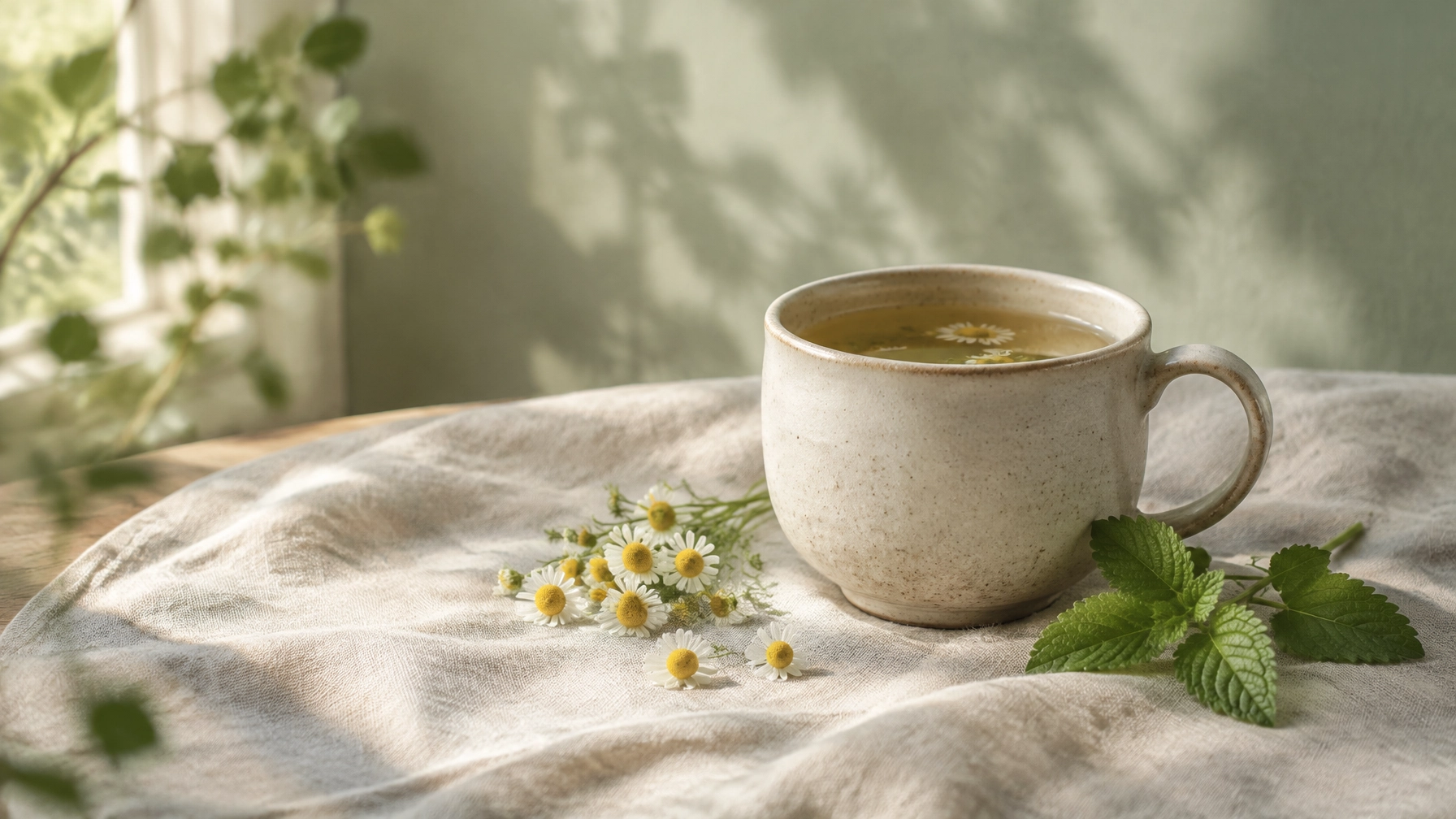
Meta description: Learn which herbal teas may support a calmer bedtime, what the evidence says, how to brew them, and when to use extra caution.
That mug before bed can be a lovely way to signal that the day is winding down. But does herbal tea for sleep do more than feel cozy? It can help you settle in, mostly through the warmth and relaxing ritual, with a few herbs showing modest but still uncertain evidence. Tea isn’t a sedative or a cure for insomnia, and results vary from person to person. Here’s what’s worth knowing about the herbs, how to brew a cup, and how to make it part of a broader sleep routine.
Which herbs are worth trying for sleep?
Research on herbal teas is limited, and some studies test concentrated extracts rather than a brewed cup. That matters: results for an extract don’t tell us exactly what a cup of tea will do. Chamomile and valerian have more study behind them than most of the herbs below, but the evidence is mixed. Several others are used traditionally, with less direct research on tea and sleep.
Chamomile: a gentle bedtime classic
Studies of chamomile suggest it may support sleep quality for some people, but results aren’t conclusive. Some research has looked at brewed tea, while other studies tested extracts. If you enjoy the taste, chamomile can be a reasonable part of a wind-down routine, just don’t count on it to solve persistent sleep problems.
Skip chamomile if you’re allergic to ragweed or related plants. If you take a blood thinner or other prescription medication, check with your healthcare provider before using it regularly.
Valerian root: more research, but mixed results
Valerian has been studied for sleep more than many other herbs, but the findings aren’t consistent. Much of the research uses extracts, not tea, so it’s hard to know how well those results apply to a brewed cup. Its earthy, strong flavor isn’t for everyone, either.
Valerian can cause drowsiness. Don’t combine it with alcohol, sleep medicines, or other sedating substances without guidance from a healthcare provider.
Lemon balm: a soothing traditional choice
Lemon balm is often used in calming herbal blends. There’s some research on combinations that include lemon balm, but less strong evidence that lemon balm tea alone improves sleep. Its mild, lemony flavor makes it an easy herb to pair with chamomile.
Passionflower: promising, but early
One small study found better self-reported sleep quality during a week of passionflower tea among healthy adults. That’s interesting, but it doesn’t establish that the tea treats insomnia or produces lasting benefits. Passionflower may cause drowsiness and isn’t appropriate for everyone, especially during pregnancy.
Lavender: soothing scent, limited tea evidence
Lavender is often associated with relaxation, but evidence that lavender tea improves sleep is limited. Research on lavender aromatherapy is a separate topic and shouldn’t be treated as proof that drinking the tea has the same effect. Use culinary lavender sparingly; its flavor can quickly overpower a blend.
Holy basil (tulsi): more stress research than tea research
An extract of holy basil has been studied in adults experiencing stress, with some promising findings for perceived stress and sleep scores. That doesn’t establish the same effects for tulsi tea. Think of it as a traditional option to explore, not a proven sleep remedy.
Peppermint: helpful for digestion, not always bedtime
Peppermint tea can be a pleasant after-meal choice, but it may aggravate reflux in some people. If heartburn tends to show up when you lie down, peppermint may not be the best bedtime pick.
| Herb | Best known for | What the evidence shows | Watch-outs |
|---|---|---|---|
| Chamomile | A gentle, familiar evening tea | Some promising findings; not conclusive | Avoid with daisy-family allergy; ask about medication interactions |
| Valerian root | Sleep support | More studied than many herbs, but results are mixed; tea evidence is limited | Can be sedating; don’t combine with alcohol or sedatives |
| Lemon balm | Calming blends | Limited evidence for tea alone | Check with a provider if pregnant, nursing, or taking medication |
| Passionflower | Traditional calming use | A small tea study is promising but preliminary | May cause drowsiness; avoid during pregnancy unless a provider advises otherwise |
| Lavender | Aroma and flavor | Tea-specific sleep evidence is limited | Strong flavor; check before use with medications |
| Holy basil (tulsi) | Traditional wellness support | Some research on extracts for stress, not much on tea | Ask a provider about medications or health conditions |
How do you brew a bedtime tea?
A simple brewing routine can help make tea feel like a clear transition into the evening. For dried leaves and flowers, start with water just off the boil and steep the tea covered for about 5–10 minutes; a longer steep may make it stronger or more bitter. Follow the package directions when using a commercial blend.
Covering your cup helps keep the aroma in. Loose-leaf tea gives you control over the herbs and strength, but a tea bag is convenient and can be just as useful for building a regular ritual. Dried herbs are common for tea and easy to store; fresh herbs can work too, though you may need more to get a similar flavor.
Honey or milk is a taste choice, not a sleep ingredient you need to add. A little honey can soften a bitter blend, and milk may make the drink feel more comforting. If you notice that eating or drinking close to bed worsens reflux or interrupts your sleep with bathroom trips, adjust the timing or amount.

What’s an easy blend to start with?
Try a mild chamomile blend: 2 parts chamomile, 1 part lemon balm, and a small pinch of culinary lavender. For a busy mind, try 2 parts lemon balm, 1 part passionflower, and 1 part tulsi. Use a small amount of each herb for your first cup and see how you like the flavor and how it fits your evening.
These are taste-oriented starting points, not treatment formulas. If you take medication, have a health condition, or are pregnant or nursing, ask a qualified healthcare professional before trying herbal blends.
What else matters for better sleep?
A cup can be one small part of your routine, not the whole plan. Sleep is shaped by a mix of habits and health factors. Caffeine late in the day, bright light at night, ongoing stress, irregular meals, alcohol, and an inconsistent schedule can all affect how easily you fall asleep or stay asleep.
Tea won’t fix sleep apnea, reflux, thyroid problems, or another underlying health concern. If you regularly snore loudly, wake gasping, have persistent heartburn, or feel unusually tired despite spending enough time in bed, talk with a licensed medical professional. A consistent evening routine and other sleep habits are part of the bigger picture.
If magnesium is already on your mind, you may also find our guide to magnesium and sleep useful. Supplements and herbs can interact with medications, so check with your provider before adding something new. If you’d rather sort through your routine with someone who knows your history, you can book a consultation.

How can you start this week?
Keep it simple and pay attention to what actually feels helpful:
- Choose one tea, such as chamomile, rather than starting several herbs at once.
- Brew it the same way and enjoy it as part of a steady wind-down routine.
- Notice whether caffeine, alcohol, late meals, or evening light seem to affect your sleep.
- If sleep problems persist or affect your daily life, discuss them with a licensed healthcare professional.
Quick takeaway: Herbal tea can make bedtime feel calmer, and some herbs have early or modest evidence behind them. Chamomile and valerian are among the more studied, but tea-specific evidence is limited, especially for valerian. Treat tea as a supportive ritual, not a replacement for good sleep habits or medical care.
About Michael Lane: Michael Lane is a board-certified traditional naturopath, board-certified master herbalist, master wellness coach, and holds a PhD in Natural Medicine. He leads Naturopathy Lane, a veteran-owned practice in Elko, Nevada.
Want help finding a sleep routine that fits?
Sleep is rarely one problem with one answer. If something in this article sounded like your own week, Michael Lane would be glad to talk it through with you. He is a board-certified traditional naturopath, board-certified master herbalist, master wellness coach, and holds a PhD in Natural Medicine.
Visits in Elko, by secure telehealth across Nevada and Idaho, and by wellness coaching wherever you live. Naturopathy Lane doesn't bill insurance: HSA and cash payments are welcome, superbills are available, and we're happy to explain what a first visit costs before you commit.
Or call (775) 299-5998 if you'd rather talk it through first.
Educational only; this article isn’t medical advice and doesn’t replace diagnosis or care from a licensed medical professional. Check with your provider before using herbs, especially if you take medication, are pregnant or nursing, or have a chronic condition.